
The neuroscience behind the injury.
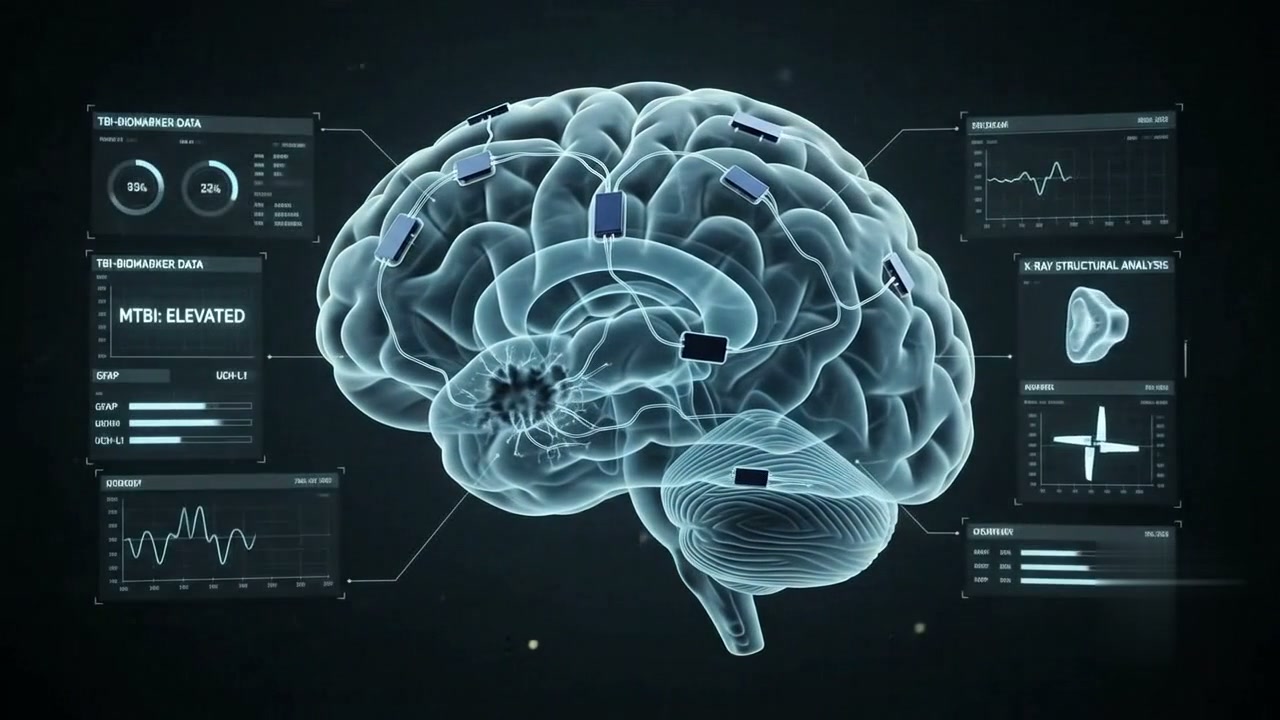
Traumatic brain injury is a mechanical, biochemical, and cellular event that unfolds over months. Understanding it is the first step to treating it.
What actually happens to the brain.
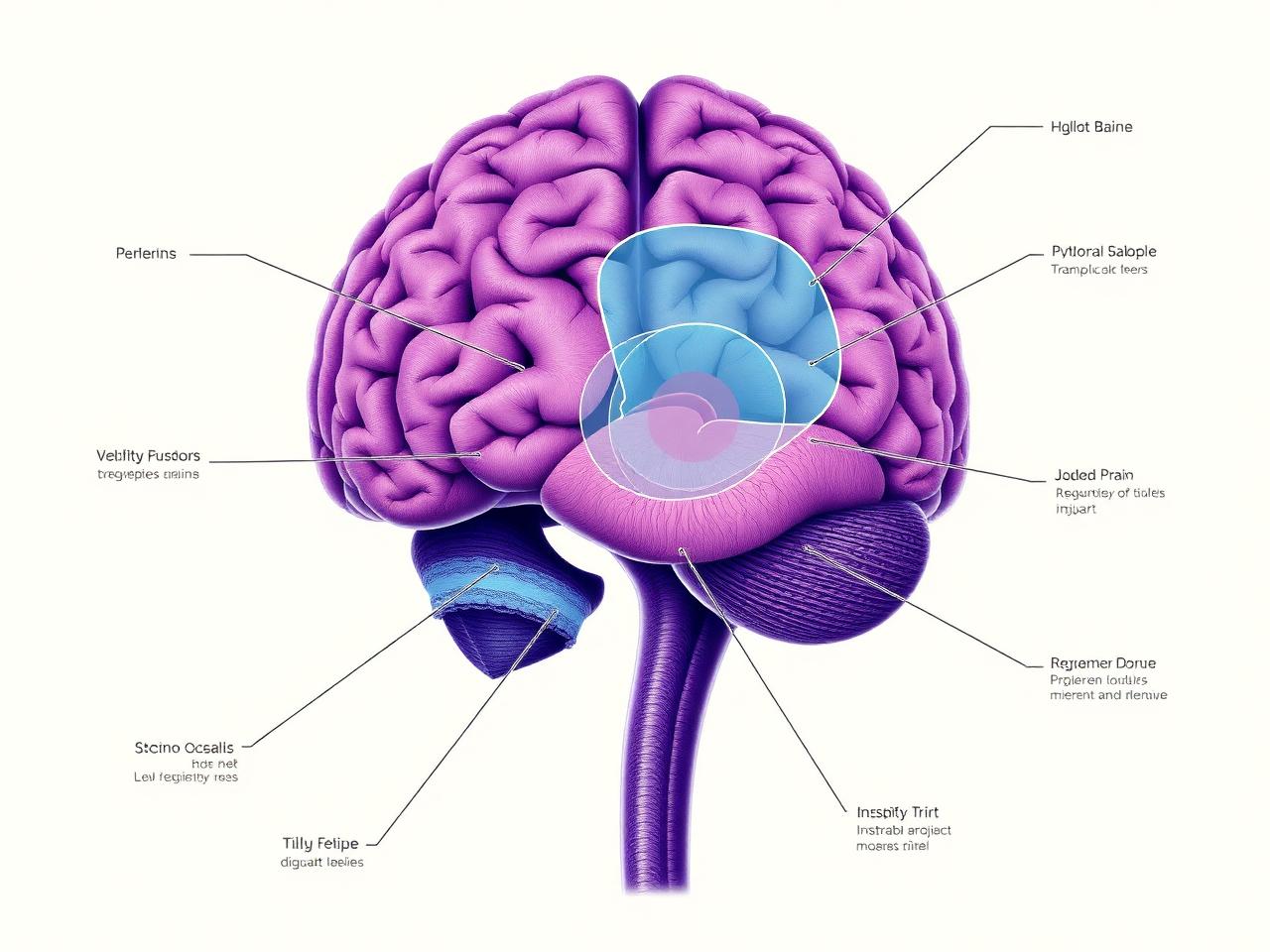
A traumatic brain injury begins with a mechanical force — impact, whiplash, or blast — that causes the brain to accelerate, decelerate, or rotate inside the skull. Axons stretch and shear at the microscopic level, a process called diffuse axonal injury.
Within minutes, a cascade of neurochemical changes follows: excess glutamate release, calcium influx, mitochondrial dysfunction, and inflammatory response. This "secondary injury" can persist for months — which is why symptoms often worsen weeks after the initial event.
Standard imaging looks for blood and swelling. But most mild TBI damage is microstructural — invisible without diffusion tensor imaging or advanced volumetric analysis.
The four dimensions of TBI.
Cognitive
- Brain fog
- Memory lapses
- Slowed processing
- Word-finding difficulty
Physical
- Persistent headaches
- Fatigue
- Nausea
- Balance issues
Emotional
- Anxiety
- Irritability
- Depression
- Mood volatility
Sleep
- Trouble falling asleep
- Sleeping more than usual
- Sleeping less than usual
- Non-restorative sleep
Cognitive
- Brain fog
- Memory lapses
- Slowed processing
- Word-finding difficulty
Physical
- Persistent headaches
- Fatigue
- Nausea
- Balance issues
Emotional
- Anxiety
- Irritability
- Depression
- Mood volatility
Sleep
- Trouble falling asleep
- Sleeping more than usual
- Sleeping less than usual
- Non-restorative sleep
TBI is more common than most realize.
Selected peer-reviewed research.